
The ukulele and the guitar look like cousins, and they share a family resemblance in shape and in the way the chords are formed. Beginners often choose between them by price or by the picture on the box, and then discover that the two instruments reward different kinds of practice. A ukulele is smaller, with four strings and a bright, cheerful sound that makes early songs feel possible within days. A guitar is larger, with six strings and a deeper voice that takes longer to master but opens up a wider range of music.
This guide compares the learning curve, the cost, the practice time and the musical reach of each instrument, and it offers a way to decide which one suits a particular beginner. It does not promise how quickly anyone will progress, since progress depends on the learner, the time they can give and the music they want to play. If you have pain in the fingers, hands or wrists, rest and speak to a physician or physiotherapist.
A beginner chooses a ukulele for its size, then picks up a guitar at a friend’s house and wants to learn more. The choice was about the music they loved, not about the instrument alone.
Size, strings and sound
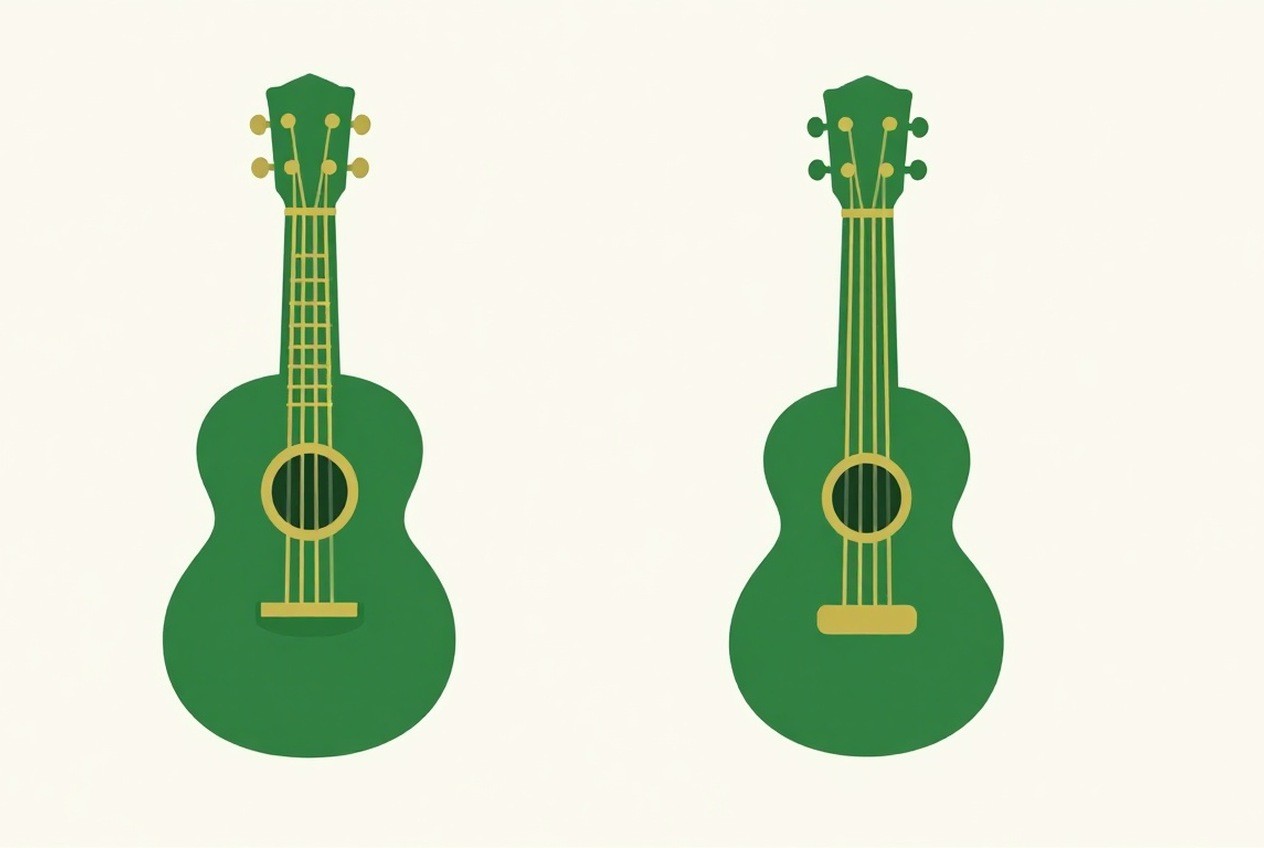
A standard ukulele has four nylon strings, usually tuned to a high G, C, E and A. Its small body and short scale make the strings easier to press, and the tone is light and cheerful. A guitar has six strings, typically steel or nylon, and a longer scale that makes the strings harder to press at first but gives a fuller, more resonant voice.
The difference in strings means the fingers feel different. Ukulele strings are softer on the fingertips, which helps early practice. Guitar strings, especially steel, can be uncomfortable for the first few weeks until calluses form.
The learning curve
The ukulele is usually quicker to start. Four strings mean fewer finger positions to remember, and many common chords are simple shapes. A beginner can often play recognizable songs within a short period, which is a powerful motivator in the early stage.
The guitar takes longer to reach the same point. Six strings, more complex chord shapes and the need to fret notes accurately across the neck mean that early songs may be slower to arrive. The guitar rewards persistence, and its range of styles, from folk and blues to rock and classical, is broader.
Cost and setup
A beginner ukulele is often less expensive than a beginner guitar, and it is easier to store and carry. The strings are cheap, and the instrument is light enough for a child or an older adult to hold comfortably. Check the setup as you would for a guitar, since a poorly set up ukulele can be frustrating.
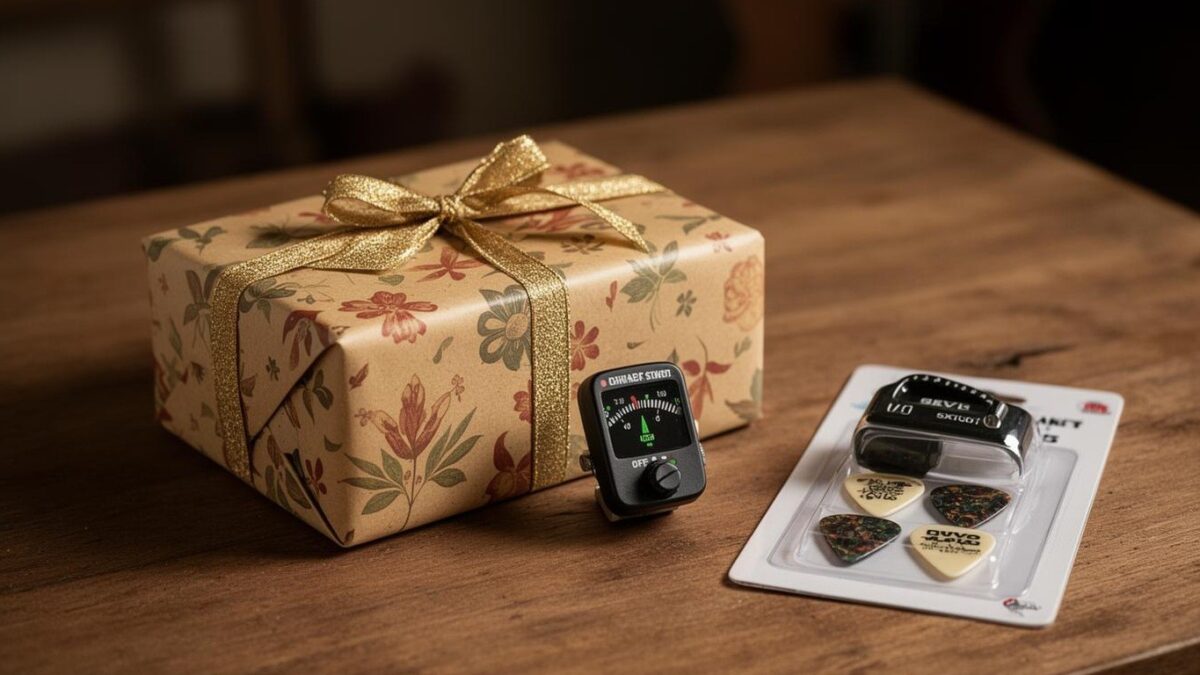
A beginner guitar may cost more, and it may need accessories such as a tuner, a strap, a capo and a case. Budget for these items. We do not quote prices, since they vary widely.
Practice time and routine
Both instruments reward short, regular practice. Ten to twenty minutes most days is more effective than a long session once a week. The ukulele’s shorter neck can make practice feel less tiring on the left hand, while the guitar’s full range of chords and techniques can keep a player engaged for years.
Many beginners find the ukulele a good way to build the habit of practicing, and then move to guitar when they want more depth. Others start with guitar and are satisfied from the first lesson. Neither path is wrong.
Musical reach
The ukulele suits folk, pop, and island and family songs, and it is a popular instrument for group singing. The guitar reaches further into rock, blues, classical, jazz, country and many other styles. If you want to play with a band or write songs in a range of genres, the guitar offers more options.
Consider the music you already love. If your favorite songs are played on guitar, a guitar will reward you sooner. If you love the sound of a ukulele and want to sing along, the ukulele may keep you playing more often.
Practical considerations
- Carrying and storage: a ukulele is smaller and lighter, which helps with travel and small homes.
- Hand size: smaller hands may find a ukulele easier, though guitars are available in smaller sizes too.
- Noise: both are quiet acoustic instruments, but a guitar can be louder.
- Future expansion: a guitar leads to a wider world of instruments, and a ukulele can be played alongside a guitar.
Questions to ask yourself
- Which music do I most want to play?
- How much time can I give each day?
- Do I want to play quickly, or do I want to build depth?
- Do I want to sing while I play?
- How much am I willing to spend on the instrument and its accessories?
Trying both before you commit
If you can, try both instruments in the same afternoon. Play a simple chord shape on each, strum a short pattern and sing a line of a song you know. Notice which instrument you reach for when you have a spare minute, and which one makes you want to play another verse. Many music shops allow a short trial, and some teachers offer a taster lesson on either instrument. A few hours of comparison can save months of regret.
Practice habits for the first month
In the first month, short and regular practice matters more than long sessions. Ten minutes a day, with one clear goal such as a single chord change or a strumming pattern, builds both the habit and the finger strength. Keep the instrument out of its case where you can see it. Tune before each session, and stop when your fingertips feel sore. If pain persists, rest the hands and speak to a physician or physiotherapist.
Bottom line
The ukulele is smaller, cheaper and quicker to play simple songs on, while the guitar takes longer but opens a wider musical range. Choose by the music you love, the time you can give and how much you want to sing. Both reward regular practice, and the instrument that you pick up every day is the right one for you.
A simple decision plan
- Write down three songs you want to play.
- Try both instruments for a short session in the same afternoon.
- Commit to ten minutes of practice a day for four weeks.